
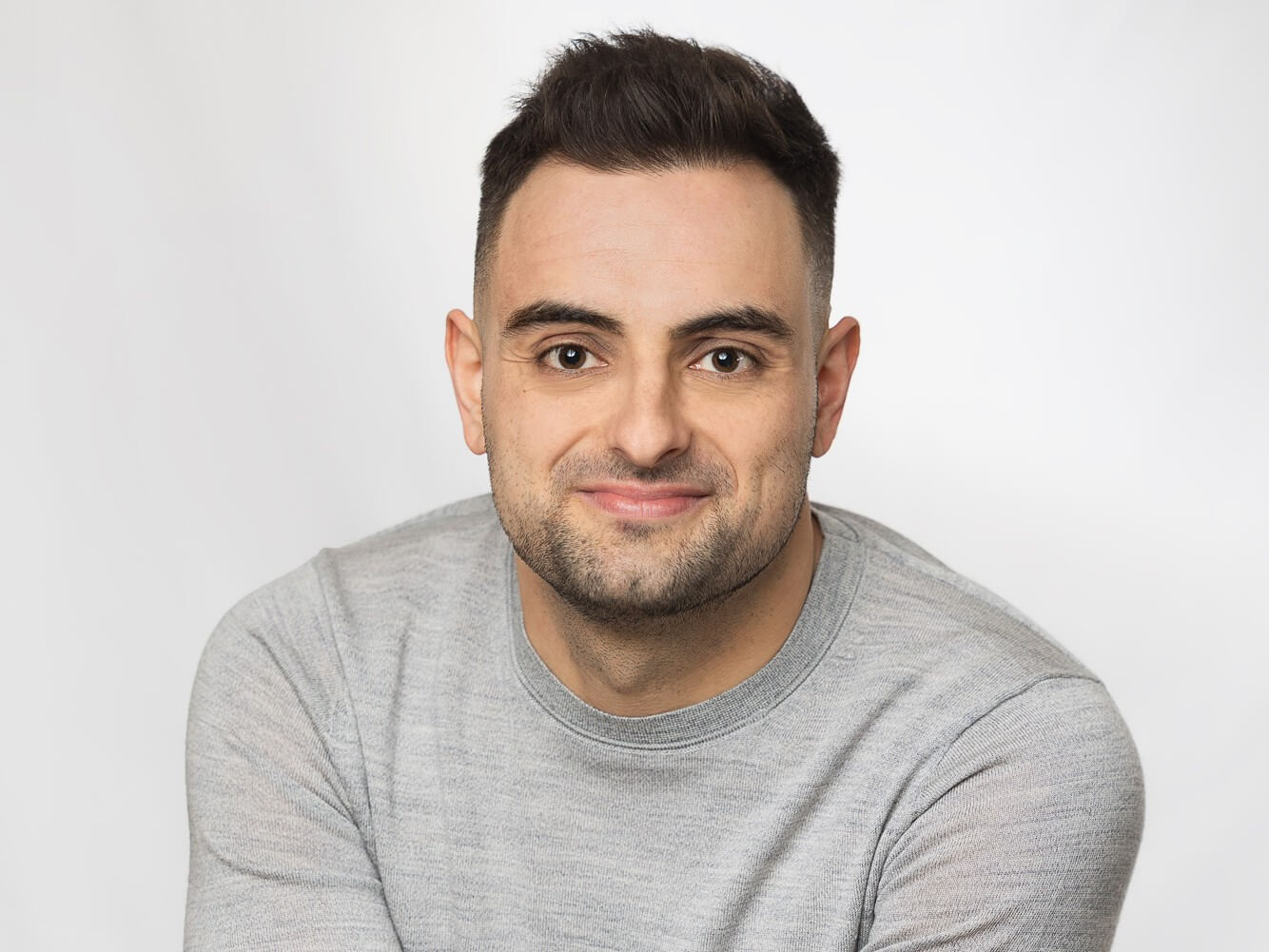
When Christian Hewgill first entered the Formula 1 paddock, he was faced with a question familiar to many LGBTQ+ people working in sport: should he be open about who he is?
Seven years later, the broadcaster, The Fast And The Curious and F1 Explains podcaster and author of Grand Prix 101 says Formula 1 has been an overwhelmingly welcoming environment. But while progress has been made, he believes there is still work to do to ensure everyone feels comfortable being themselves in motorsport.
As part of our Pride Month series celebrating LGBTQ+ voices in the sport, Christian reflects on visibility, acceptance and why representation still matters.
Finding a place in Formula 1
Christian made his paddock debut at the 2019 British Grand Prix. “I was working for the BBC at the time, working on Radio One’s news and sport programme, Newsbeat,” he says. “It was a dream come true, and I’ll always remember the excitement of that day. I’d started to do bits of Formula 1 for Radio One [and] it’s that work that made me have to think about a decision as to whether I wanted to be out or not.
“Just as I started at Radio One, I got a lovely offer from the people of Foxes Pride, Leicester City Football Club’s LGBT fan group asking if I wanted to be a patron. I think certainly sports felt the more daunting atmosphere to be out in and getting that offer made me have to think, well, do I want to do this? It sounds quite cliche, but I just thought back to when I was a big Radio One fan growing up, I remember listening to their sports presenter from Wembley or whatever it was and distinctively thinking, I guess I couldn’t do that because I’m gay.
“I was involved in a couple of sports at the time, I was a kart racer. I was a season ticket holder at Leicester City and it just didn’t feel the sort of atmosphere that you could be out in. I just thought back to myself, as a teenager and thought I should do this.”
Acceptance in the paddock
Having made that decision, Christian found F1 an accepting space. “Indifferent is a good word to describe it, and I don’t mean that in a bad way,” he says. “I’ve never come across anything homophobia-related in Formula 1. I think the first time I remember thinking about it in an F1 context was when I went to Bahrain. I just felt wary knowing this is a country that has certain laws. Then again, I was there as accredited media, with the protection of a major national broadcaster like the BBC.
“I think the things that have stuck out was little things, like, when I announced my engagement [in] the early part of my fourth full-time season in Formula 1. When I announced I was getting engaged, McLaren and Aston Martin, two of the teams that get on very well with, sent gifts. I’ve had within the Formula 1 paddock nothing but acceptance. I’ve definitely had homophobia online and abuse online, that won’t surprise anybody reading this but within Formula 1 it’s felt fine.”
Progress and remaining challenges
Christian is still very much aware of the prejudices that exist in everyday life, however, including within the motorsport world “I’m fortunate that most of the people I come across in my life aren’t homophobic. But I think it’s naive to say that that’s the experience of everyone.
“That makes me think we haven’t got as far as I thought we would, because I guess I thought the next generation would not have that but I know they do, because I still speak to people, and my DMs are full of people saying, ‘I work in this sport and haven’t felt comfortable enough to come out’, some in their sporting environment, some to friends and family. That makes me sad that we haven’t gone further.
“Now, I’m not saying the sport’s not doing anything to try and fix that, because certainly it’s made good progress on the female side of things, but I think it’s a stereotype, because it’s true.”
Being involved in both sports, Christian thinks that there are some parallels between motorsport and football in that both have a similar demographic and one that reflects everyday life. “I’m a big believer that sport is reflective of society,” he explains. “You only have to look at the [Football] World Cup. ITV have appointed a pundit called Emma Hayes, who does tactical insights, and the hydration breaks of ITV’s coverage.
“I think in motorsport and football there are good, and in some places, effective efforts to try and improve things, but we are reminded of the prejudice that exists in sport every single day.”
Why representation matters
Christian does remain optimistic for change and points out that “today’s F1 drivers are reflective of society” and “aren’t afraid to show characteristics, talking about certain issues” compared to previous generations.
He also advises anyone from the LGBT+ community to be open in the motorsport environment. “Go and do what you want to go and do. I am a firm believer that you can be LGBT+ and anything you like, don’t think you’re restricted. Now, that doesn’t mean there won’t be hard bits along the way, but you shouldn’t let it stop you doing anything, particularly if you want to go into motorsports.
Representation remains one of the most powerful tools for change: showing that there is a place in motorsport for everyone, whether as a competitor, volunteer, official, engineer, broadcaster or fan. As Motorsport UK continues to celebrate Pride Month and champion a sport that is safe, fair and fun for all, Christian’s message is simple: be yourself, follow your passion, and don’t let anyone tell you that motorsport isn’t for you.
Click here for more details of Motorsport UK’s inclusion programmes.