
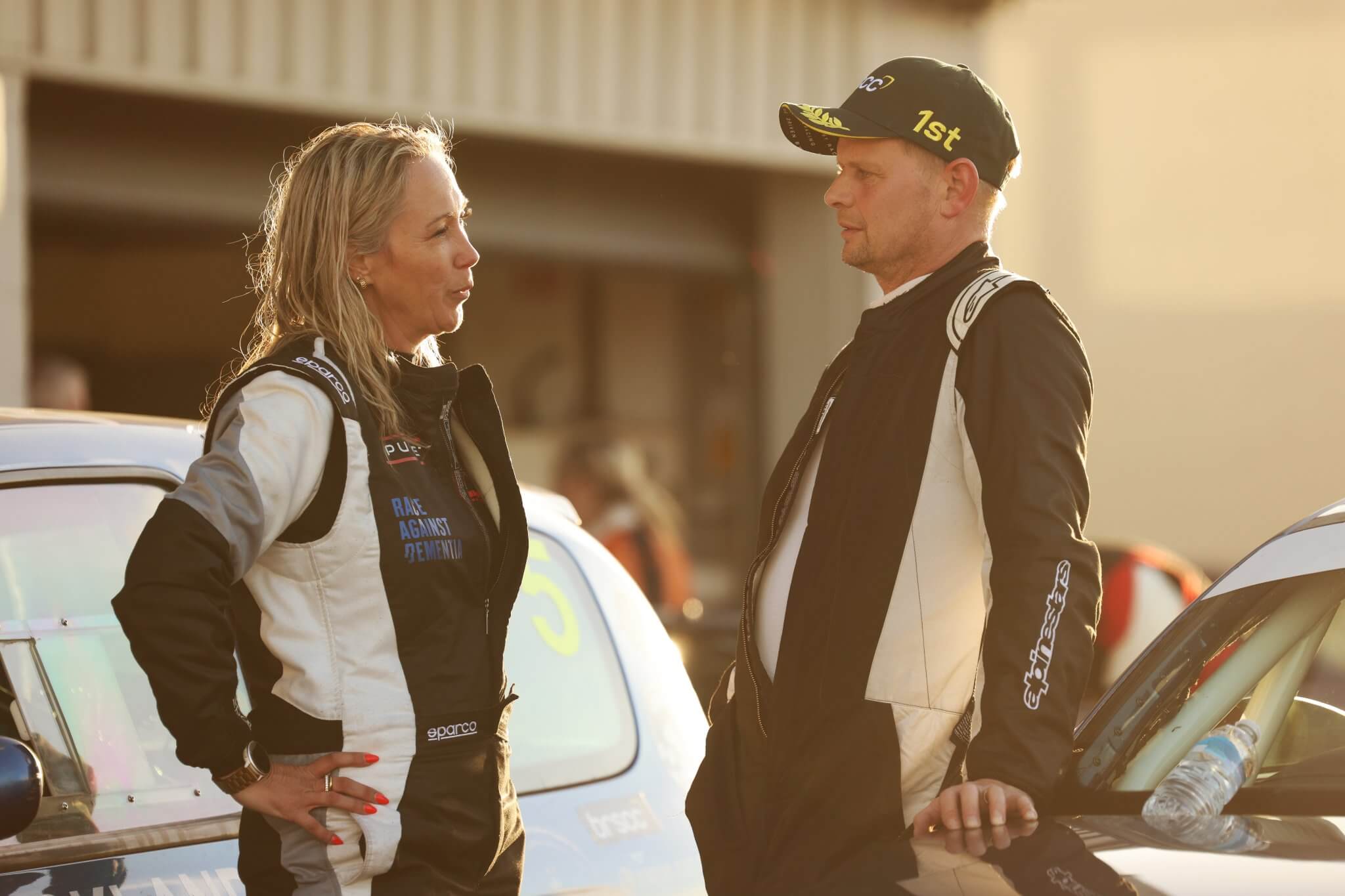
For Sarah Dennis, motorsport has always been bigger than just what happens behind the wheel.
From discovering racing as a teenager to returning to the driver’s seat after starting a family, her journey has helped shape a passion for making the sport more accessible to others.
Now 48, Sarah is the owner of Puretrack Racing, a team helping drivers take their first steps into competition. With five race cars competing across the SuperSport and Production Cup categories, the team is as much about creating opportunities as it is about chasing results.
“There’s something very special about club racing,” she explains. “It’s more how everybody will help each other. We’ve had various teams coming into the garage on race days, borrowing tools and stuff. And likewise, they’ll do the same for us.
“It’s a family. I think that’s first and foremost what it is. We race because we are a family unit and that’s why we love club racing.”
It is a sentiment that runs through everything Sarah does, both behind the wheel and in helping others discover the sport.
A passion that never went away
Sarah’s route into motorsport began, as she puts it, with a little mischief.
“I was being a naughty child. My dad took me to Brands Hatch and fell in love with it.”
She started racing at 17, at a time when women were less commonly seen competing in the sport. Determined to pursue her interest, she also trained as a mechanic to deepen her understanding of the cars she was racing.
“I really wanted to do it, so I stuck with it,” she recalls.
She continued racing until around the age of 30, when family life prompted her to step away from competition. She got married, had children and hung up her helmet, seemingly closing that chapter of her life.
But motorsport has a habit of drawing people back.
During the COVID-19 pandemic, Sarah’s father became seriously ill. One of his wishes was to see her race again, prompting them to build a car and prepare it for her return.
Tragically, he passed away just a week before her first race back. At an incredibly difficult moment, it was getting back in the car that reaffirmed what racing meant to her.
“As soon as I got back in the race car, I was like, ‘I’m doing this.’”
That return would become the starting point for something bigger. Having experienced motorsport from the driver’s seat, Sarah also recognised an opportunity to help other people find their own way onto the grid.
Making the first step less daunting
Motorsport can appear difficult to break into. The cost of competing, the equipment required and the challenge of knowing where to begin can all be barriers, particularly for those without existing connections in the paddock.
Sarah recognised that gap and built Puretrack Racing around helping people navigate it.
“We try and make it as easy as possible for drivers to come in.”
The approach is designed to take drivers from their first experiences on track through to their first race, rather than expecting them to figure everything out alone. That might mean working with someone who has enjoyed track days for years, or a sim racer looking to go from virtual to real world.
Puretrack Racing introduces drivers to track driving, provides coaching and helps them understand what they need before progressing towards competition.
Once a driver is comfortable, the team can advise on the equipment required, help them work towards obtaining their race licence and guide them into their first event. The aim is to make the transition into racing feel like a progression, not a leap into the unknown.
It’s a practical approach that recognises there is no single route into motorsport. What matters is finding a starting point, building confidence and having people around you who can help along the way.
Endurance racing as a starting point
One of the ways Puretrack Racing introduces newcomers to competition is through endurance racing, with the team contesting two-hour events as well as other forms of racing.
For a first-time competitor, endurance racing might not seem the obvious place to start. But Sarah believes its team-focused format can make it an ideal introduction. Rather than asking a new driver to shoulder the pressure of an entire race, the team can use more experienced drivers at the start before bringing newcomers into the action later on.
It gives them the opportunity to experience racing conditions in a supportive environment, with less pressure as they learn.
“In essence, that driver going out for the first time is like having a track day,” she explains.
Endurance racing also introduces competitors to a different side of the sport. Success is not simply about driving as fast as possible; it requires communication, consistency and an understanding of how to manage both the car and the people sharing it.
Drivers must conserve tyres, consider fatigue and work together to keep the car competitive over the course of the race.
“I like it because it’s calmer,” Sarah says, contrasting endurance competition with the intensity of sprint racing. “Endurance, it’s very much a team game as well.”
It can also make the financial side of racing more manageable. Drivers can share the driving and split costs, while arrive-and-drive opportunities allow people to compete without having to own and maintain a race car themselves.
For those who have been thinking about racing but are unsure how to make the numbers work, or whether they have enough experience, that flexibility can be an important starting point. Sarah sees endurance racing as an opportunity to build confidence, develop car control and learn the rhythms of competition before later moving into sprint racing.
Opening the door to the next generation
Getting more people involved in motorsport means more than putting drivers behind the wheel. At the circuit, Puretrack Racing also has work experience opportunities, helping young people gain an insight into the industry and the work that goes into running a racing team.
It reflects Sarah’s wider ambition to open doors for people who might not otherwise get the opportunity to experience motorsport from the inside. Whether someone wants to become a driver, learn about the mechanical side of the sport or find their place within a team, there are different ways to get involved.
And while the cars and competition may be what first attract people to a circuit, it is often the people who make them stay.
The willingness of teams to lend tools, share knowledge and help one another out is part of what makes club racing such a unique environment. Competitors may be fighting for position on track, but away from it, that shared passion creates a community that can support people at every stage of their journey.
The hidden impact of motorsport
The benefits of motorsport go far beyond the thrill of competition. Being part of a racing team can also have a significant impact on people’s wellbeing, providing a sense of purpose, belonging and something positive to focus on.
Sarah believes the sport has played an important role in supporting her own mental health, as well as that of others within the team.
“Honestly, it’s going to sound a bit dramatic, but I think motorsport has saved me, as well as a lot of my teammates, in terms of mental health.”
It is something Sarah is keen to speak openly about. While mental health is increasingly discussed, she knows that several of her drivers face their own challenges and sees racing as a valuable distraction and source of motivation.
“I know for a fact at least three of my drivers suffer with their mental health, and coming racing is a distraction.”
Sarah believes that having racing to look forward to can also provide structure and focus, particularly during difficult periods.
“For us as a team, we’re big ambassadors of looking after people’s mental health.”
Your next step could be closer than you think
For anyone who has watched club racing and wondered whether they could be part of it, Sarah’s story is a reminder that there is no single path into the sport.
Some arrive through track days, others through sim racing, and some discover their passion as children before returning to it years later. The important thing is finding a route that works for you and seeking out the people who can help make it happen.
That might start with a conversation with a racing team, a coached track day or exploring the requirements for a competition licence. From there, the journey can develop at a pace that suits the individual.
Wanting to find your own path in motorsport? Take a look at our Get Started page to find out which discipline best suits you, and the steps required to getting involved!