
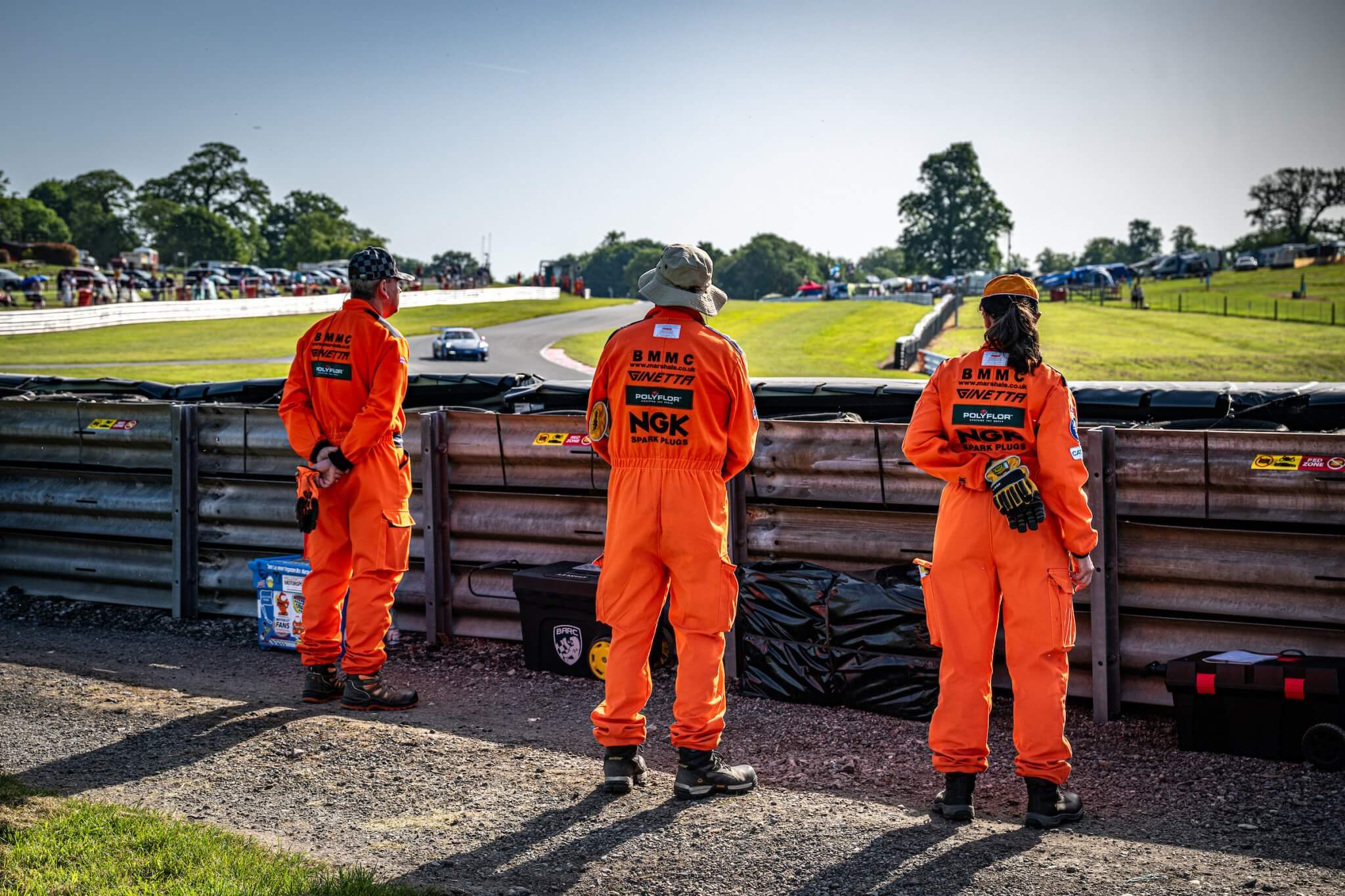
Whether you’re marshalling at your local circuit or visiting somewhere new, understanding the FIA marshalling post numbering system can help make communication clearer and support effective incident management.
The standardised system plays an important role in circuit operations, helping Race Control, Clerks of the Course, rescue units, medical services and other officials quickly identify locations around a circuit, even when working at a venue for the first time.
Why is a standardised numbering system important?
Historically, many circuits developed their own marshalling post numbering systems, often numbering posts sequentially around the lap (Post 1, Post 2, Post 3, etc.), with little connection to the circuit layout.
While this worked well for marshals and officials familiar with their local circuit, it could present challenges for those visiting a venue for the first time.
For example, a report of an incident at ‘Post 27’ would provide little indication of its location without prior knowledge of the circuit layout.
During time-critical incidents, this could delay officials in identifying the location and deploying the appropriate resources.
How does the FIA numbering system work?
The FIA system links marshalling post numbers directly to corner numbers, providing a consistent way of identifying locations around a circuit.
Each post is identified using the corner number it serves, followed by a decimal number indicating the percentage distance between turns.
For example:
- Post 5: The primary post serving Turn 5.
- Post 5.5: An additional post associated with Turn 5, located halfway between Turn 5 and Turn 6.
- Post 5.8: An additional post associated with Turn 5, located 80% of the distance between Turn 5 and Turn 6.
This approach provides useful geographical context to anyone receiving information about an incident.
For example, when Race Control receives a report from ‘Post 8.5’, officials can identify that the incident is associated with Turn 8 and located halfway between Turn 8 and Turn 9, without needing detailed local knowledge of the circuit.
How does the system support incident management?
By linking marshalling posts to corner numbers, the system offers several practical benefits for those involved in running events and responding to incidents.
Faster identification of incident locations
Race Control personnel can quickly visualise where an incident has occurred simply from the post number, helping everyone involved build a clearer picture of the situation.
More efficient deployment of resources
When an incident location is immediately identifiable, rescue units, medical teams and safety cars can be deployed more efficiently.
Corner-based numbering helps controllers quickly determine:
- The nearest intervention route
- The closest available resource
- Suitable access gates
- Potential alternative response routes
Making things easier for visiting officials
Throughout the season, many officials travel between circuits, sometimes visiting a particular venue only once or twice a year.
For Clerks of the Course, rescue units, medical services and other officials, a standardised numbering system reduces the need to learn an entirely new post numbering scheme at every circuit.
By providing a clear reference to the circuit layout, the system makes it easier to identify locations and become familiar with a venue.
Supporting clear communication across motorsport
From familiar circuits to new venues, having a consistent approach to marshalling post numbering helps everyone involved in an event communicate more clearly.
Understanding how the FIA system works supports effective coordination between teams, helping officials respond efficiently when incidents occur.
By working together and sharing a clear understanding of the systems that support our sport, we can continue to make motorsport safe, fair and fun for everyone.
Together, we make motorsport happen.